Buying a new vessel demands careful evaluation rather than just picking an appealing layout. Purchasing the wrong hull design leads to unsafe conditions in rough seas or heavily restricted access to shallow inshore fisheries. Navigating these diverse waters requires a specialized approach. While modern hybrid models certainly exist today, true bay boats and offshore boats solve fundamentally different on-water problems. You must understand how specific hull geometry directly impacts safety, draft capabilities, and overall stability. Misjudging these mechanical factors often results in a severely compromised experience. This guide provides a clear, spec-driven evaluation framework. It helps align your primary fishing grounds and logistical realities with the correct vessel class. We will explore critical draft metrics, specialized deck layouts, and structural differences. By reviewing these elements closely, you will gain the knowledge needed to make a confident, safe, and practical decision for your future marine adventures.
Key Takeaways
Hull Geometry dictates capability: Bay boats prioritize shallow draft (lower deadrise) for inshore access; offshore boats prioritize wave-cutting ability (steeper deep-V deadrise) for safety and comfort in open water.
Range and Deck Layout: Offshore vessels require significantly larger fuel capacities and higher freeboard compared to the casting-platform-heavy layouts of bay boats.
Logistical Realities: Towing weight, storage requirements, and total cost of ownership scale upward significantly as you move from bay to offshore classes.
Model Selection: Matching your 80% use-case to the right platform (e.g., assessing an aluminum heavy-duty model like the BOSS770MAX Offshore Fishing Boat for serious deep-water application) is critical for ROI.
Defining the Core Metric: Deadrise, Draft, and Displacement
Deadrise angle serves as the most critical measurement for any hull design. Builders measure this angle from the horizontal plane to the hull bottom. It dictates how a vessel interacts with water resistance. Bay boats typically feature a 14- to 18-degree deadrise at the transom. This flatter angle allows for incredibly shallow drafts. Many bay models navigate waters just 12 to 15 inches deep. You can push pole across coastal flats effortlessly.
You will see a stark contrast when examining an Offshore Fishing Boat. These open-water vessels typically feature a 21- to 24-degree deep-V deadrise. This steep angle slices aggressively through heavy ocean chop. It cushions the ride significantly during rough passages. However, this aggressive angle requires more horsepower to push onto plane. It also increases the resting draft, preventing access to skinny water.
Freeboard and gunwale height represent another major division. Freeboard measures the distance from the waterline to the top of the gunwale. Higher gunwales prevent the deck from taking on water in heavy seas. They keep your crew securely inside the cockpit during violent swells. Conversely, these tall sides make landing fish by hand much more difficult. Low-profile bay boats offer excellent water access. Anglers can easily reach over the side to release a catch.
To determine your success criteria, you must audit your local waters realistically. Consider your typical weekend conditions. Navigating a steady 2-foot chop inside a protected sound demands different architecture than battling 4-to-6-foot ocean swells. Accurately assessing your primary environment prevents dangerous mismatches.
The Bay Boat Profile: Inshore Versatility and Light Coastal Use
Engineers design bay boats specifically for protected and semi-protected waterways. Their primary applications include estuaries, coastal flats, winding backwater bays, and calm nearshore environments. They excel when water conditions remain relatively stable. Anglers appreciate their unique blend of agility and functional deck space.
Certain features directly drive specific on-water outcomes. We can break these down into three distinct advantages:
Fore and Aft Casting Decks: Bay boats maximize elevated platform space. These raised decks provide exceptional visibility for sight-casting. You can spot cruising redfish or tarpon from a greater distance.
Trolling Motor Integration: A bow-mounted trolling motor is essential. The low bow profile catches minimal wind. This allows for precise, quiet positioning in shallow water. You can stalk spooky fish without running the main outboard.
Lighter Displacement: Flatter hulls require less raw fiberglass or aluminum. This lighter displacement makes them much easier to tow. Most standard half-ton pickups handle bay boats effortlessly. They also provide better fuel efficiency per mile traveled.
Despite these benefits, you face significant implementation risks. Venturing past the inlet exposes the hull’s limitations. If the weather turns unexpectedly, the ride becomes violently uncomfortable. The low freeboard invites breaking waves over the bow. A flatter deadrise will pound aggressively against steep chop. Pushing a bay boat beyond its intended coastal limits becomes dangerous quickly.
The Offshore Fishing Boat: Built for Big Water Endurance
Vessels engineered for open water tackle entirely different environments. Their primary applications include blue water trolling, deep-sea bottom fishing, and extended runs past the sight of land. Operating 50 miles offshore leaves zero margin for structural failure. Every design choice focuses on endurance, safety, and crew comfort.
We can identify several key features that yield vital offshore outcomes. These elements separate true deep-water platforms from lighter coastal skiffs.
Deep-V Hull & Heavy Displacement: Heavy displacement subdues aggressive wave action. The steep deadrise prevents hull slamming. It provides a stable, predictable ride in large open-ocean troughs.
Extended Range Capabilities: Ocean runs require massive fuel capacities. You will often see twin-engine configurations. Dual outboards provide necessary redundancy. If one motor fails, the second brings you home safely.
Weather Mitigation Systems: Offshore conditions change rapidly. Large T-tops, enclosed helms, or full pilothouses protect operators. Shielding the crew from harsh sun, driving rain, and freezing spray prevents dangerous fatigue.
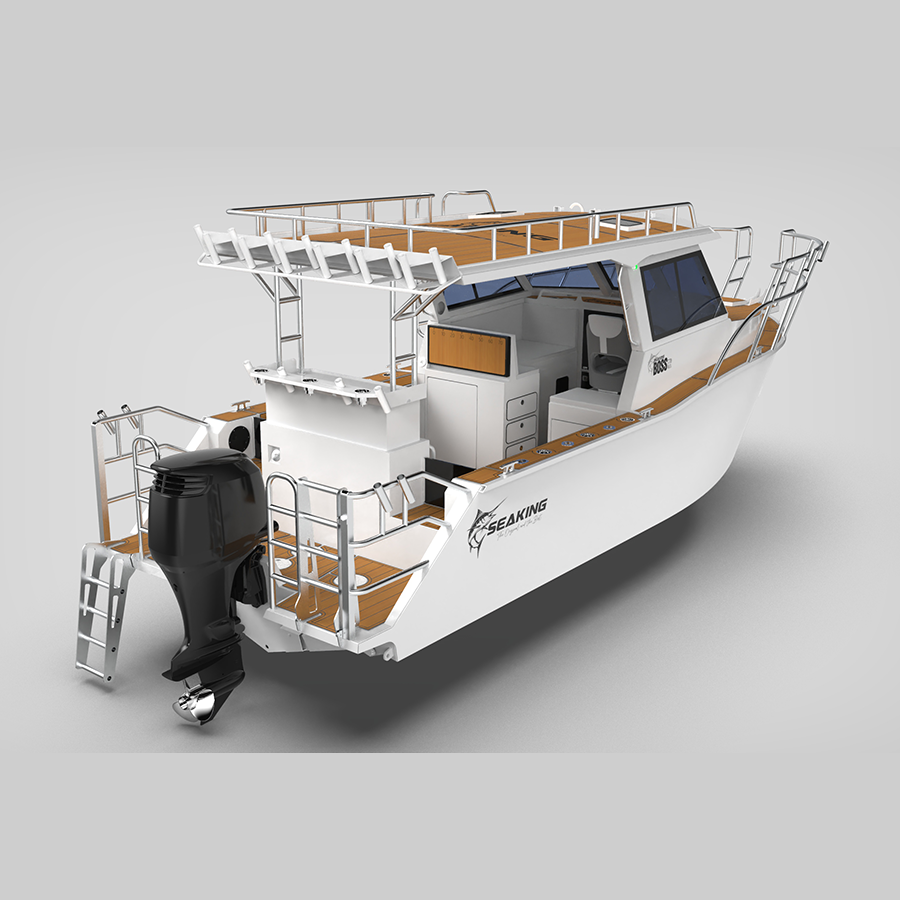
Benchmarking the category requires looking at specialized construction. Many serious anglers now prefer heavy-duty aluminum builds over fiberglass. Brands like Easy Craft and Profisher offer distinct durability advantages. Their welded plate construction withstands severe ocean pounding. For those seeking maximum structural integrity, the BOSS770MAX Offshore Fishing Boat stands out. Builders engineer it specifically for strict offshore compliance. It utilizes deep-water layouts to keep crews secure during demanding expeditions.
Head-to-Head Evaluation: Which Boat Matches Your Fishery?
Buyers often struggle to commit to one specific style. The best approach utilizes the "80% Rule." Ask yourself what you will do 80% of the time on the water. Do not buy a vessel based on an annual one-off trip. Buy it for your everyday reality.
Target species heavily influence this decision. Chasing redfish, speckled trout, or shallow-water tarpon requires stealth. Bay boats dominate this arena. Conversely, pursuing pelagic species like tuna, mahi-mahi, or wahoo demands ocean access. A deep-V hull is non-negotiable for these blue water targets.
Crew size and safety requirements also dictate hull choice. Offshore boats offer deeper cockpits. High gunwales provide excellent family safety, especially for children. Bay boats require better balance. Passengers must navigate elevated casting decks while underway.
You always face a trade-off between ride comfort and fishing access. A heavy hull cuts smoothly through heavy chop but will ground out in 15-inch tidal waters. A light hull floats in ankle-deep water but will jar your spine in a 3-foot sea.
Vessel Capability Comparison Matrix
| Evaluation Metric | Bay Boat Platform | Offshore Deep-V Platform |
| Transom Deadrise | 14 to 18 degrees (Flatter) | 21 to 24 degrees (Aggressive V) |
| Operating Draft | 12 to 15 inches | 20 to 30+ inches |
| Deck Layout | Elevated fore/aft casting decks | Deep cockpit, high freeboard |
| Primary Environment | Protected bays, flats, estuaries | Open ocean, heavy swells, inlets |
Logistical Realities: Storage and Towing Dimensions
Beyond on-water performance, physical logistical realities dictate ownership feasibility. Storage and towing requirements differ vastly between these two classes. You must evaluate your vehicle and your property dimensions before committing to a purchase.
Detailing the towing requirements reveals immediate differences. A large deep-water hull carries immense physical weight. When you combine dual engines, massive fuel tanks, and heavy-duty trailers, the payload surges. You typically require a heavy-duty truck (3/4 ton or larger) to haul these safely. Additionally, some blue water vessels feature beam widths exceeding standard legal limits. They may require specialized trailering permits depending on your local highway regulations. Conversely, bay boats are broadly tow-friendly. Their lighter displacement and narrower beams allow standard SUVs and half-ton pickups to transport them easily.
Storage logistics also present unique challenges. A bay boat often fits easily into a standard suburban driveway. Its lower profile allows it to slide under carports or into residential garages without snagging T-tops. Deep-V ocean vessels usually require dedicated marina slips or commercial dry-stack storage. Their towering pilothouses and dual-axle trailers consume massive physical footprints.
Finally, consider your logistical fuel range. Pushing a heavy, deep-V aluminum or fiberglass hull through ocean currents requires immense energy. These vessels feature massive fuel cells to accommodate offshore distances. A flats skiff utilizes a smaller tank, keeping the overall trailering weight manageable. Managing these dimensional and weight realities ensures your vehicle can safely handle the load.
Conclusion
Ultimately, the final recommendation logic relies on honest self-assessment. The choice comes down to prioritizing either safety and comfort in open water or access and agility in the shallows. You cannot cheat marine physics. Matching your primary environment to the correct deadrise and displacement ensures long-term satisfaction.
Follow these actionable next steps before finalizing your purchase:
Audit your logbook to determine where you actually fished over the last 24 months. Apply the 80% rule rigorously.
Schedule sea trials in realistic conditions. Do not rely on flat-calm test days. Drive the hull through heavy boat wakes to test the deadrise.
Review your tow vehicle’s exact payload capacity. Cross-reference it against the fully fueled weight of your desired vessel.
Measure your driveway, garage, or local marina slip to ensure the boat's beam and height fit your storage constraints.
FAQ
Q: Can you take a bay boat offshore?
A: Yes, but only on exceptionally calm days. You must monitor weather forecasts obsessively. A lower deadrise pounds violently in open ocean swell. Furthermore, the low freeboard creates severe safety risks if the weather shifts. Breaking waves can easily breach the low bow, potentially swamping the vessel far from shore.
Q: Is a center console the same as an offshore boat?
A: No. A "center console" simply describes a deck layout where the steering station sits in the middle. It is not a hull type. Both shallow-draft bay skiffs and massive deep-V ocean vessels can utilize center console layouts. You must evaluate the deadrise angle, not just the steering location.
Q: What is a "hybrid" or "cross-over" boat?
A: Hybrid models typically feature a 19- to 21-degree deadrise. They attempt to bridge the gap between inshore and offshore capabilities. However, they present a transparent trade-off. They draw too much water to access skinny flats, yet they still pound noticeably more than a true deep-V in heavy seas.


