Selecting the wrong marine transport asset routinely leads to severe schedule overruns. Project managers often face excessive secondary equipment costs and site access failures. This operational breakdown happens when vessel capabilities misalign with actual project realities. We must properly evaluate vessels designed for dynamic, infrastructure-free access against those built for maximum static payload and stability. You need a clear understanding of a landing craft barge vs work barge to make informed operational decisions. This guide provides a strictly commercial, evidence-based evaluation of both vessel categories. We will explore core structural differences, payload limits, and real-world deployment logistics. You will learn exactly how to match specific hull designs to your local shoreline conditions. We aim to support your procurement teams and operational planning with actionable, field-tested insights.
Key Takeaways
A landing craft barge is optimized for Roll-On/Roll-Off (RORO) operations and shallow-water beaching, eliminating the need for established dock infrastructure.
A work barge (often a traditional deck barge) prioritizes massive payload capacity and stable platform operations but typically requires tug assistance and shoreside loading equipment.
Material selection matters: an aluminum landing craft offers speed and corrosion resistance for coastal logistics, whereas heavy-duty steel work barges are required for high-impact construction payloads.
Cost calculations must include operational dependencies—work barges often carry hidden OpEx in the form of tugboat charters and crane rentals.
Defining the Baseline: Fleet Classification and Primary Uses
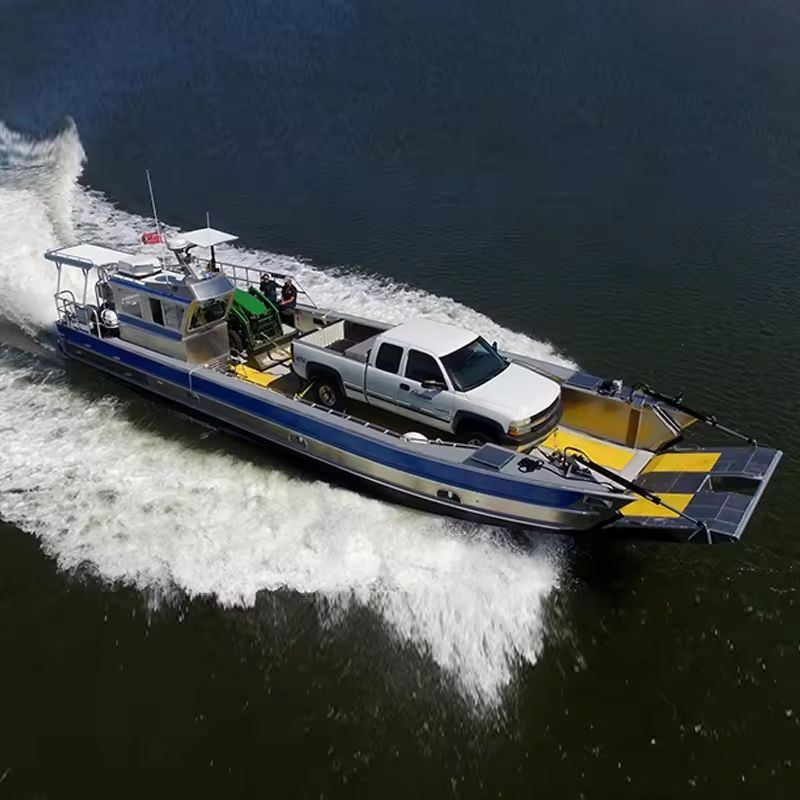
A landing craft barge operates as a powered, shallow-draft vessel featuring a specialized drop-down bow ramp. Naval architects build these vessels specifically for point-to-point delivery. You do not need established port infrastructure to deploy them. They thrive in remote coastal areas and shallow river systems. Operators drive cargo directly onto unimproved beaches, saving time and bypassing complex logistics chains.
Conversely, we define a work barge as a heavily constructed, flat-decked vessel. These units remain predominantly unpowered. Shipyards build them to serve as floating staging areas. They act as heavy lift platforms or bulk material transporters. You will frequently see them moored alongside marine construction sites, holding massive piles of rock or supporting large cranes.
You must clearly distinguish these specialized platforms from a standard work boat. A general work boat effectively supports crew transit. It may handle light towing duties or small equipment transfers. However, barges—both landing craft and traditional deck types—feature specific engineering for heavy payload logistics. They provide the massive deck space and structural stability required for heavy industrial maritime operations.
Evaluating Landing Craft Barge vs Work Barge: Core Structural Differences
Bow Design and Access
Landing craft feature a mechanized bow door. This ramp lowers directly onto shorelines. It provides immediate land access for vehicles, machinery, and crew. The design completely eliminates the need for lifting equipment at the destination. Work barges present a very different profile. They typically feature a raked or completely square bow. You cannot simply drive equipment onto them. They require shoreside cranes, sturdy transfer ramps, or complex secondary platforms for loading.
Draft and Beaching Capabilities
Draft dictates exactly where a vessel can safely travel. Landing craft utilize a flat-bottom or shallow-V hull design. Engineers construct these hulls specifically to intentionally ground on shorelines. We call this operational maneuver beaching. You can beach them safely on sand, gravel, or mud banks. Work barges also feature flat bottoms, but they carry a significantly deeper draft when fully laden. Their massive steel structures and heavy bulk payloads push them deep into the water. Operators typically restrict them to deep-water quays, commercial docks, or offshore moorings.
Propulsion Systems
Mobility defines the operational independence of a marine asset. Landing craft are entirely self-propelled. They utilize inboard diesels or heavy-duty outboard configurations. This setup offers independent maneuverability in tight coastal zones. Work barges generally remain non-self-propelled. They completely rely on push boats or tugs for movement. This reliance introduces major secondary vessel dependencies into your logistics planning.
Payload, Cargo, and Transport Capabilities
Roll-On/Roll-Off (RORO) vs. Lift-On/Lift-Off (LOLO)
Understanding loading methodologies is critical for modern marine logistics. We classify loading techniques primarily into Roll-On/Roll-Off (RORO) and Lift-On/Lift-Off (LOLO). The landing craft stands as the definitive car transport barge. It functions perfectly as a mobile equipment carrier. Operators can drive excavators, supply trucks, and passenger vehicles directly on and off the deck. This RORO capability slashes turnaround times dramatically.
The traditional work barge excels at LOLO operations. It provides a superior stable platform for bulk aggregates. Project managers use them to stage heavy crawler cranes and oversized static loads. These massive payloads require top-down loading via shoreside or floating cranes. You cannot roll this type of cargo on.
Volume vs. Weight Constraints
Payload limits dictate your ultimate vessel choice. A dedicated cargo landing craft excels at moving mixed freight. It handles volume-based transport brilliantly. We frequently deploy them for island logistics, where varied supplies matter more than raw, concentrated weight. They easily deliver vehicles, palletized building materials, and fuel bladders in a single efficient run.
Work barges win strictly on deadweight tonnage (DWT). They accommodate immense weight limits. Their deck load ratings often exceed thousands of pounds per square foot. When your project demands moving 500 tons of quarry rock or structural steel, the work barge becomes your only realistic option.
Material Selection and Implementation Realities
Aluminum vs. Steel Dynamics
An aluminum landing craft provides distinct operational advantages. Aluminum delivers an exceptional power-to-weight ratio. This translates directly into higher speeds and much better fuel efficiency. The lighter material ensures a significantly lower draft. Furthermore, aluminum requires minimal maintenance. Aluminum oxide forms a natural protective layer, halting corrosion in saltwater environments. You never need to paint the hull to prevent rust. This makes it ideal for fast logistics and rapid deployment cycles.
Steel work barges serve entirely different operational needs. Heavy marine construction demands extreme high-impact resistance. You cannot drop multi-ton riprap onto an aluminum deck without causing severe structural damage. Heavy tracked machinery easily scrapes and gouges softer metals. Steel absorbs these brutal industrial impacts effectively, though it requires constant surface preparation and epoxy coating.
Site Condition Limitations (Risk Assessment)
Every vessel faces environmental limitations. You must perform a rigorous risk assessment before deployment. Landing craft remain vulnerable to specific coastal hazards. Steep shoreline gradients can prevent the bow ramp from seating properly. Extreme tidal shifts pose a severe stranding risk. If the tide drops rapidly during offloading, your self-propelled vessel might sit dry for hours. Heavy surf zones also complicate ramp stability during offloading.
Work barges face their own distinct risks. They are virtually unusable in remote areas lacking bulkheads. You cannot stage them without established heavy-lift grounds. They strictly require deep channels and predictable moorings to function safely.
Table 1: Operational Characteristics and Limitations Matrix
| Characteristic | Landing Craft Barge | Work Barge (Deck Type) |
| Loading Method | RORO (Drive directly on/off) | LOLO (Crane required) |
| Infrastructure Need | None (Beaches, boat ramps) | Commercial quays, deep-water docks |
| Ideal Payload Type | Vehicles, mixed freight, passengers | Bulk aggregates, heavy crawler cranes |
| Primary Material | Marine-grade Aluminum | Heavy-duty Steel |
| Propulsion | Self-propelled (Independent) | Tug-dependent (Push boat needed) |
Commercial Deployment: Costs, Compliance, and Crewing
CapEx vs. OpEx Modeling
Financial modeling for marine assets requires looking beyond the purchase price. Landing craft generally demand a higher initial CapEx. You are paying for engines, complex hydraulics, and specialized hull designs. However, they deliver much lower OpEx over time. You operate a single vessel. You pay one crew. You buy fuel for one independent system.
Work barges flip this financial model completely. You benefit from a lower initial CapEx for the bare steel hull. Yet, you face a significantly high OpEx. When calculating operational expenses, you must track these three variables:
Charter Rates: Tugboats charge high daily rates, heavily impacting long-term project budgets.
Crane Fees: Shoreside cranes require expensive hourly rentals and specialized operators for LOLO tasks.
Crew Ratios: Non-propelled barges require separate crews for the towing vessel and the deck operations.
Regulatory & Licensing Hurdles
Maritime regulations heavily influence procurement. You must navigate USCG rules or your local maritime authority guidelines. Self-propelled landing craft require licensed masters. The specific tonnage of the vessel dictates the required captain's license level. We advise checking tonnage rules early in the procurement phase.
Uninspected work barges follow different compliance thresholds. These rules largely depend on the towing vessel and the specific cargo. Hauling hazardous materials triggers strict environmental compliance protocols. You must account for these regulatory burdens during the early planning phase to avoid project delays.
Decision Framework: Shortlisting the Right Vessel for Your Project
Procurement teams need a structured approach to asset selection. Use the following parameters to guide your vessel shortlisting process.
Choose a Landing Craft Barge if:
You are operating in remote locations, island chains, or unimproved coastlines.
Your primary cargo includes wheeled trucks, passenger cars, or tracked vehicles.
Rapid deployment and independent mobility represent critical success criteria for your project.
You lack the budget or infrastructure to support daily crane rentals.
Choose a Work Barge if:
You are serving a stationary platform for marine construction, pile driving, or dredging operations.
You need to move massive bulk payloads like rock, sand, or heavy steel structures between established ports.
You already own or have long-term access to commercial tugboats and push boats.
Your project requires an exceptionally high deck load rating.
Conclusion
The choice between a landing craft barge and a heavy-duty work barge ultimately comes down to infrastructure availability and payload capacity. If your operations rely on unimproved shorelines and rapid RORO capabilities, self-propelled landing vessels provide unmatched versatility. When your project demands moving immense static weight between commercial deep-water quays, traditional deck barges remain superior.
We strongly encourage procurement teams to conduct a thorough route-and-site survey before finalizing decisions. Evaluate your local tides, shoreline gradients, and specific payload weights carefully. Accurately matching your vessel to your environmental realities prevents costly delays. Analyze your required operational dependencies before requesting quotes or vessel charters.
FAQ
Q: Can a work barge be self-propelled?
A: Yes. Naval architects design self-propelled barges (SPBs) to bridge the gap between traditional towed barges and motorized cargo ships. SPBs offer independent mobility and heavy payload capacity. However, they typically feature traditional bows and lack the specialized drop-down beaching ramp found on a landing craft.
Q: What is the maximum payload for an aluminum landing craft?
A: Payload capacities vary widely based on hull length. A standard commercial aluminum landing craft typically hauls between 3 to 15 tons. Custom heavy-duty models can exceed 30 tons. While aluminum is exceptionally strong and light, it possesses different fatigue limits than steel, making it unsuitable for extreme heavy-lift bulk aggregates.
Q: Do I need a commercial dock to load a landing craft barge?
A: No. Landing craft are engineered specifically to bypass commercial docks. You can utilize public boat ramps, natural sandy beaches, and concrete slipways. The mechanized bow ramp lowers directly onto the shoreline, allowing vehicles and personnel to load and unload without any specialized shoreside infrastructure.


