Upgrading to a serious offshore or commercial vessel represents a critical decision point for buyers. You must balance ride comfort, absolute structural integrity, and long-term durability. Unfortunately, the marine market often blurs the lines between heavy-duty pressed aluminum and true plate construction. This confusion leads to mismatched investments and unmet expectations on the water. Many buyers unknowingly purchase vessels lacking the internal framework required for punishing offshore conditions.
This guide provides a no-nonsense framework for evaluating hull geometry, weld integrity, and layout configurations. We will explore how to identify authentic plate construction. You will learn to match structural designs to your specific operational demands. Our goal is to equip you with the exact knowledge needed to evaluate these machines accurately. By prioritizing engineering facts over cosmetic appeal, you can confidently select a vessel perfectly suited for your next maritime deployment.
Key Takeaways
True plate boats rely on a fully welded sub-floor matrix and high-tensile marine-grade aluminum (typically 5083), not just thicker sheet metal.
Deadrise angles and reverse chines dictate the balance between rough-water slicing capability and stability at rest.
Center cabin configurations maximize offshore fishability, but require trade-offs in internal cabin volume.
Upgrading to plate construction introduces distinct weight and towing requirements that must factor into the total cost of ownership.
The Engineering Reality: True Aluminum Plate Boat vs. Pressed Hulls
Authentic plate construction goes far beyond simply bolting thicker metal together. An authentic aluminum plate boat relies on specific material grades and rigid precision engineering. Builders typically utilize high-tensile marine-grade alloy. They most commonly select the 5083 grade due to its high magnesium content. This specific composition provides exceptional resistance to saltwater corrosion. Engineers mandate a minimum thickness of 4mm for the side sheets and 5mm for the bottom sections. Factories cut these heavy plates using computer-guided CNC routers. The metal never undergoes structural pressing, rolling, or stretching. Those manufacturing shortcuts artificially weaken the molecular structure of the alloy.
True strength comes from the internal skeleton rather than the outer skin alone. A genuine plate hull features a dense, fully welded sub-floor matrix. This matrix consists of heavy longitudinal stringers and transverse bulkheads. This intersecting grid acts as a massive kinetic shock absorber. When the vessel slams into a wave, the grid disperses the impact energy evenly across the entire hull. Basic rib-and-stringer systems used in lightweight pressed boats cannot handle equivalent offshore punishment. They localize the stress, which leads directly to structural failure.
You must learn to spot "plate-look" models hiding in the showroom. Some manufacturers utilize standard 5052 alloys to cut costs. Others press ridges or strakes into thin side sheets to simulate rigid strength. These shortcuts introduce severe long-term fatigue risks. Heavy offshore pounding eventually causes these pressed, rigid sheets to crack along the tension lines. A common mistake is judging a boat purely by its exterior profile. You must always inspect the under-deck framing plans before purchasing.
The Fully Welded Advantage
Investing in a true full welded fishing boat eliminates dangerous structural rivets and cheap stitch-welds. A fully seam-welded primary structure drastically minimizes potential water ingress points. It prevents catastrophic metal fatigue failures when navigating heavy offshore loads. The solid beads fuse the entire sub-frame into a single, unyielding monolith. This structural unity provides unparalleled confidence when weather conditions deteriorate rapidly miles from the coastline.
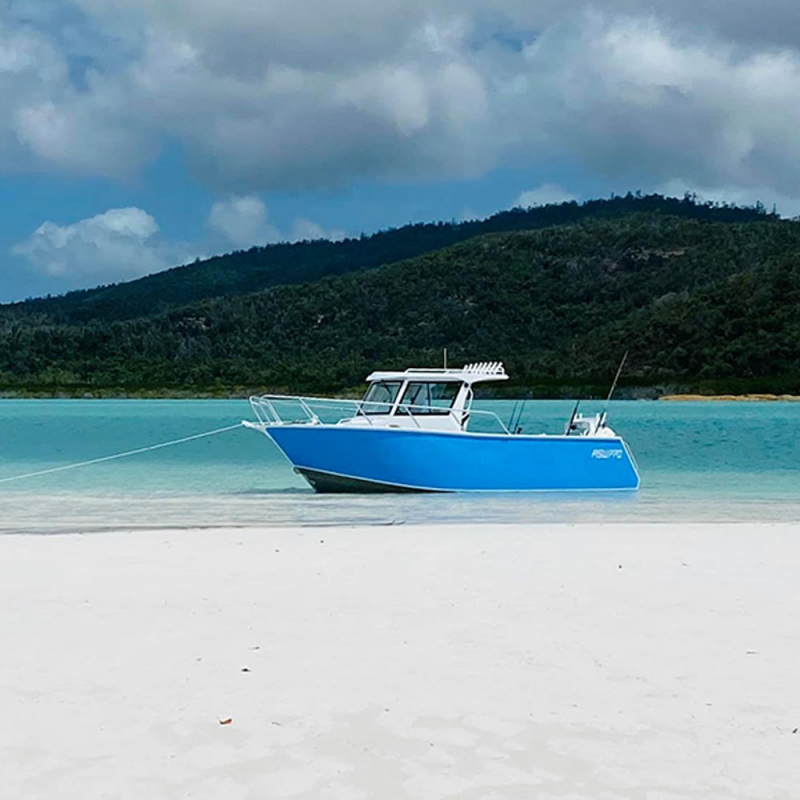
Evaluating V-Hull Fishing Boat Dynamics and Geometry
Offshore performance relies heavily on precise underwater geometry. A well-designed V-hull fishing boat must transition smoothly from a razor-sharp bow entry down to a moderate stern angle. This shape dictates how the vessel interacts with varying water pressures.
Deadrise and Variable Geometry
The entry angle at the bow dictates how effectively the vessel slices through aggressive chop. Builders aim for a steep, sharp entry angle, often exceeding 20 degrees. This extreme steepness cuts wave energy before it reaches the helm. However, maintaining that steepness all the way to the transom creates dangerous lateral instability. Therefore, engineers gradually transition the hull to a moderate transom deadrise. This rear angle typically measures between 16 and 18 degrees. This variable geometry provides both a soft, punishing-free ride and a stable stationary fishing platform.
Deadrise Angle Impact Summary
| Deadrise Type | Angle Range | Primary Benefit | Primary Drawback |
| Deep-V (Bow Entry) | 20° - 24°+ | Exceptional wave slicing and soft ride | High draft, poor stationary stability |
| Moderate-V (Transom) | 15° - 19° | Excellent balance of ride and stability | May slap slightly in extreme following seas |
| Shallow/Flat | 0° - 12° | Maximum stability and shallow draft | Harsh, pounding ride in choppy water |
Chine Design and Stability
Reverse chines play a vital mechanical role in modern hull behavior. They act as downward-angled horizontal lips running along the lower outer edges of the hull. When underway, they forcefully deflect spray away from the deck, keeping passengers dry. More importantly, they create immense hydrodynamic lift. This lift forces the heavy hull onto a plane much faster. At rest, reverse chines trap upward water pressure. This trapping action addresses the old "rocky aluminum boat" objection entirely. It locks the hull in place, preventing extreme side-to-side rolling when anglers move around the deck.
Water Ballast Systems
Many premium builders now integrate floodable keels into their designs. This hollow cavity runs along the centerline and fills with surrounding water when the vessel is stationary. The added mass significantly lowers the overall center of gravity. It effectively bridges the stability gap between lighter metal hulls and heavily built fiberglass models. The moment you push the throttle forward, the water drains rapidly from the rear vents. You regain your lightweight performance instantly.
Performance Trade-offs
Physics demands compromises. Deep-V designs sit deeper in the water at rest. They displace significantly more volume than flat, pressed hulls. Consequently, they demand higher horsepower outboards to achieve optimal cruising speeds. You will also experience increased fuel consumption. Buyers must factor these performance realities into their operational planning.
Center Cabin Boat vs. Alternative Layouts: Matching Design to Application
Selecting the right deck layout determines your daily operational efficiency. The superstructure must align directly with your primary maritime tasks. A poor layout choice restricts movement and introduces unnecessary fatigue.
The Center Cabin Advantage
Many hardcore offshore anglers and commercial crews prioritize the center cabin boat configuration above all others. This design places the enclosed shelter directly in the middle of the deck space.
360-Degree Access: It provides true walkaround mobility. This unbroken path proves essential when fighting fast pelagic species around the entire perimeter of the vessel.
Gear Management: It allows commercial operators to manage heavy pots, traps, or nets from any deck position safely without navigating blind corners.
Centralized Helm: The layout centralizes the helm positioning. This center mass placement improves overall weight distribution. It significantly reduces vertical travel at the steering wheel, lessening driver fatigue in heavy seas.
Cuddy Cabin and Half Cabins
These traditional layouts push the entire superstructure forward toward the bow. You lose critical forward deck space, but you gain massive amounts of dry storage. They offer vital overnight sleeping capabilities. Evaluate them based on your local climate. They suit mixed family usage or cold environments requiring solid forward wind protection. The main trade-off remains reduced mobility. You cannot safely cast from the bow in heavy swell.
Open Console (Center/Side)
Open layouts maximize sheer deck real estate. They excel at inshore casting, shallow water maneuvering, or strict commercial utility work. However, they lack a structural cabin superstructure. This absence means the under-deck matrix must bear all torsional hull loads alone. Builders must over-engineer the sub-floor framing to compensate for the missing upper cabin bulkheads. Make sure any open console vessel you evaluate features upgraded transverse bracing beneath the floorboards.
Strength, Compliance, and Weld Integrity Standards
You cannot evaluate hull longevity based on flashy paint quality. Real durability lives exclusively in the raw fabrication details. We must examine the welding execution and domestic compliance standards closely to verify safety.
Evaluation Lenses for Fabrication
Always inspect the raw weld beads before looking at the electronics. Look for consistent, uniform "stack of dimes" patterns. The welds must lack any visible porosity, pitting, or burn-through. A true builder relies on full-penetration structural welds for all major joins. Avoid boats relying heavily on cosmetic capping or excessive grinding. Grinding down welds for a perfectly smooth finish often sacrifices crucial joint strength. A best practice is to request photos of the bare hull during the manufacturing phase.
Commercial Survey Standards
Seek out builders adhering to strict domestic marine survey requirements. Frameworks like the USCG in America or the NSCV in Australia enforce rigorous fabrication codes. Builders meeting these commercial standards inherently deliver higher safety margins for recreational buyers. Their survey-rated vessels utilize thicker materials, denser framing intervals, and certified weld procedures. A hull built to commercial standards will shrug off recreational impacts effortlessly.
Flotation and Safety
Do not assume all marine foam acts equally. Positive foam flotation standards vary wildly across the industry. Basic level flotation only keeps a swamped hull from sinking completely to the ocean floor. The hull might still roll over upside down, leaving you exposed. Offshore-rated upright flotation ensures the vessel remains stable and horizontally upright even when completely flooded. Always verify the specific buoyancy standard printed on the capacity plate.
Implementation Risks
Bare-hull builds face severe outfitting dangers if rigged by amateurs. Galvanic corrosion occurs rapidly if dissimilar metals interact in a wet environment. For example, bolting stainless steel fittings directly to raw aluminum in saltwater creates a battery effect. The softer aluminum corrodes and degrades almost immediately. Installers must isolate these metals properly. They must use nylon washers, Duralac paste, and proper dielectric barriers during the wiring and outfitting phase.
Transparent Ownership Considerations and Next Steps
Moving up to a commercial-grade platform introduces new logistical realities. You must plan for these operational shifts early to ensure a seamless transition to heavy-duty boating.
Weight and Towing Realities
A true fully-framed plate boat carries significant mass. You must calculate the exact towing weight, known as the BMT (Boat, Motor, Trailer) package. A fully fueled rig with heavy outboards and gear often exceeds standard passenger vehicle capacities. You will likely face mandatory trailer upgrade necessities. Look into heavy-duty dual axles and reliable electric breakaway braking systems. Ensure your towing vehicle possesses the legal rated capacity to pull the loaded rig safely at highway speeds.
Maintenance Assumptions
You face a distinct choice regarding exterior finishes. Maintaining unpainted marine aluminum requires routine oxidation protection. Periodic acid washes keep the bare metal clean and structurally sound. This raw finish hides docking scratches perfectly. Conversely, two-pack marine paint systems look stunning and professional. However, they require careful upkeep. Scratches cutting deep through the paint require immediate touch-ups. If left exposed, saltwater gets under the paint layer and causes ugly blistering.
Cost-to-Lifespan Ratio
These robust hulls demand a higher upfront acquisition cost. We must frame this against a multi-decade operational lifespan. Authentic fabricated vessels suffer much lower depreciation than mass-produced, thin-gauge models. They hold their resale value aggressively. They also offer significantly reduced hull-repair costs compared to fiberglass. A harsh impact against a submerged log might dent heavy aluminum, but it will shatter fiberglass entirely.
Shortlisting Actions
Take definitive, aggressive steps before signing any purchase contract. Demand a sea trial in realistic, choppy conditions. Test the vessel's stability at rest by having two adults stand on one side. Drive the vessel directly into a head sea to evaluate the hull entry and ride dampening. Ask builders directly about their alloy certification sources. Scrutinize their warranty limitations regarding commercial usage, offshore limits, or horsepower upgrades.
Conclusion
Choosing a heavy-duty vessel requires looking past the surface shine. You must prioritize the internal structural sub-framing and precise hull geometry over mere cosmetic features. A vessel’s true value lies in its certified alloy grade, variable deadrise design, and flawless welding integrity. These fundamental elements guarantee your safety and performance when offshore conditions deteriorate unexpectedly.
Make your purchasing decisions based on verifiable mechanical facts rather than showroom appeal. We encourage you to request a detailed hull specification sheet from your short-listed manufacturers immediately. Consult directly with a qualified builder on custom configurations tailored specifically to your fishing style or commercial needs. Review a specific model lineup today to find the exact platform your next serious adventure demands.
FAQ
Q: Is a plate boat always heavier than fiberglass?
A: Not always, but the gap is much narrower than many assume. While raw aluminum is lighter than fiberglass, authentic plate vessels use incredibly dense structural sub-framing and thick 5mm sheets. A fully framed aluminum hull often approaches the weight of an equivalent-length fiberglass boat. This mass provides excellent momentum and ride dampening.
Q: Can an aluminum plate boat crack?
A: Yes, but it is highly unlikely in authentic, high-quality builds. High-tensile 5083 alloy resists metal fatigue exceptionally well. While thin pressed aluminum boats frequently crack along stress points, true sub-frame failure in plate construction remains rare. The longitudinal framing absorbs the kinetic energy before it can fracture the outer sheets.
Q: What is the minimum thickness for a true plate boat?
A: Industry baselines dictate a strict minimum of 4mm for side sheets and 5mm for bottom sheets. As vessel length exceeds 6 meters, premium builders often scale the bottom thickness to 6mm or even 8mm. This increased thickness handles the massive hydrodynamic pressure and impact loads encountered offshore.
Q: Does a fully welded aluminum hull ride as soft as fiberglass?
A: Modern designs come incredibly close. Historically, heavy fiberglass offered superior variable hull shapes. Today, precision-cut variable deadrise designs and floodable water ballast systems allow welded aluminum hulls to displace weight effectively. They offer a remarkably soft, predictable ride, though acoustic noise from water slap can still be slightly higher.


