Procuring marine vessels carries significant financial and operational risks. Mismatching vessel specifications to real-world demands often causes severe problems for operators. Buying the wrong boat leads to compromised safety, regulatory failures, or degraded commercial returns. You must differentiate between a vessel’s theoretical maximum deadweight and its practical capacity. Operational payloads change drastically in varied marine environments. A vessel performing perfectly in deep water might fail during shallow approaches or coastal chop.
We will explore a structured approach to evaluating these technical specifications. You will learn how to analyze deck footprint, optimize weight distribution, and ensure safety compliance. We focus heavily on realistic landing craft load capacity limits. This guide empowers you to make highly informed decisions for your next marine procurement. We will show you how to match precise hull dimensions to your exact daily operational profile.
Key Takeaways
Usable deck space and center of gravity (CG) often dictate actual payload limits before maximum weight tonnage is reached.
Ramp specifications and deck point-loading are critical limiters for a vehicle transport landing craft.
Standardized sizing (from a small cargo landing craft up to heavy utility vessels) directly correlates with capital expenditure and daily operational ROI.
A rigorous landing craft water test and stability assessment are non-negotiable for verifying paper specifications.
Understanding Landing Craft Load Capacity: Deadweight vs. Usable Footprint
Manufacturers often list maximum deadweight tonnage prominently on marketing materials. This number represents the absolute maximum weight the hull can theoretically support. It rarely reflects everyday operational capability. Reaching maximum tonnage often requires perfect weather and deep water. Real-world conditions always demand strict safety margins. Relying purely on paper specifications creates a dangerous illusion of capability. You must look beyond simple weight metrics to understand true vessel performance.
Cargo type drastically affects how you utilize landing craft load capacity. High-density materials like steel beams or wet aggregate maximize weight limits very quickly. In contrast, high-volume cargo consumes valuable space rapidly. Wheeled vehicles or bulky disaster relief supplies fill the deck long before maxing out weight capacities. You must calculate usable deck space for your specific cargo. Usable footprint matters much more than theoretical tonnage for most commercial operators.
Pushing a vessel to its maximum capacity alters its draft significantly. A fully loaded vessel sits much lower in the water. This increased draft limits operation in shallow coastal and inland waters. Buyers often purchase these specific vessels entirely for shallow access. Ignoring draft changes leads to frequent and dangerous grounding risks. You must calculate expected draft under typical daily loads, not just an empty hull.
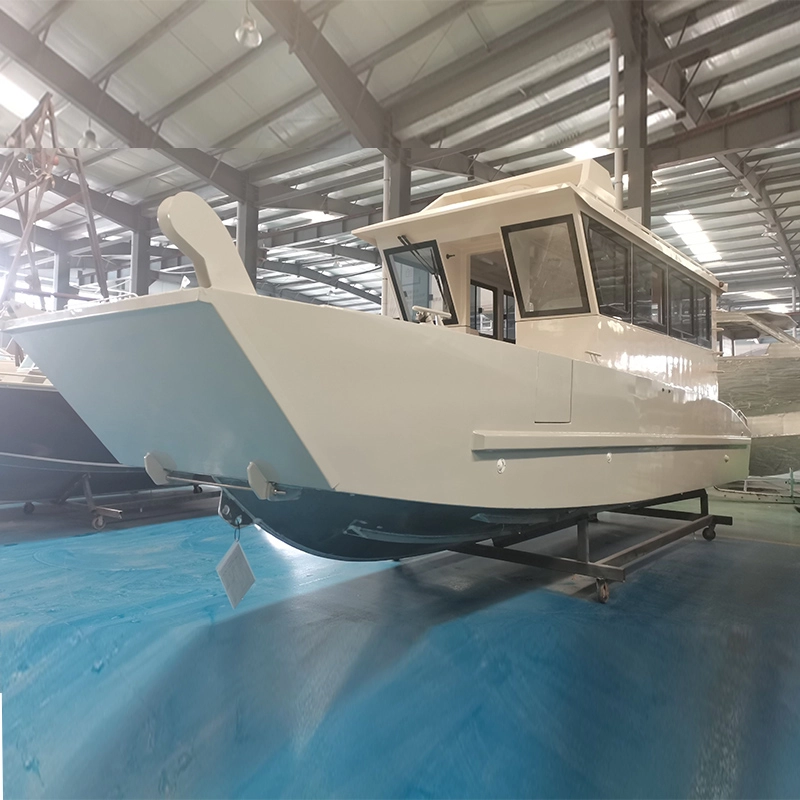
Sizing Tiers: Matching the Vessel to the Mission
Evaluating different sizing tiers helps align capital investment with operational realities. Selecting the right class prevents overspending on unnecessary structural reinforcements. We evaluate standard vessel sizes to guide your procurement strategy.
Sizing Evaluation Matrix for Marine Procurement
| Vessel Class | Primary Use Cases | Key Evaluation Criteria |
| Under 5 Tons | Inter-island logistics, light aquaculture, rapid response | Outboard efficiency, usable footprint, shallow draft limits |
| 15-Ton Range | Construction equipment, multi-purpose freight | Structural integrity, fuel economy, commercial returns |
| Heavy Utility (LCU) | Military logistics, heavy earth-moving equipment | Military standard compliance, heavy-duty propulsion |
The Small Cargo Landing Craft (Under 5 Tons)
A small cargo landing craft serves highly specific, nimble operational roles. Operators use them for rapid inter-island logistics or light aquaculture maintenance. Emergency responders deploy them quickly for disaster relief. Evaluation criteria at this tier focus heavily on outboard engine efficiency. You must balance fuel consumption against strict payload limits. Overloading these smaller vessels compromises maneuverability rapidly. Buyers should prioritize deck layout efficiency over raw carrying capacity.
The 15-Ton Landing Craft (The Commercial Sweet Spot)
The 15-ton landing craft hits the commercial sweet spot for many contractors. They transport mid-sized construction equipment perfectly. Island resorts use them for multi-purpose freight delivery. At this tier, evaluation requires balancing structural materials carefully. Buyers must weigh marine-grade aluminum against heavier steel construction. Aluminum offers excellent corrosion resistance and fuel efficiency. You must match the material choice to your desired commercial returns and maintenance capabilities.
Heavy Utility and Mechanized Craft (LCU/LCM scale)
Heavy utility vessels handle extreme logistical demands. They transport military-grade logistics and heavy earth-moving equipment. Operations require moving massive payloads across unpredictable coastal environments. Evaluation criteria shift toward strict military-standard compliance. Buyers look at generalized characteristics like bulkhead reinforcements and heavy-duty propulsion systems. These vessels require inboard diesel power plants to generate massive torque. They prioritize brute force and survivability over nimble maneuvering.
Evaluating a Vehicle Transport Landing Craft
A vehicle transport landing craft requires rigorous ramp articulation evaluation. Do not look solely at total vehicle weight. Axle-weight limits dictate ramp survival. Heavy machinery applies extreme pressure on very small contact patches. The bow ramp hinges must handle these intense point loads during boarding. A ramp designed for ten tons total might buckle under a five-ton single axle. Engineers must reinforce hinges to handle dynamic stresses.
Deck reinforcement requires careful planning during the design phase. Tracked vehicles stress deck plating differently than wheeled trucks do. Tracks distribute overall weight but create high shear forces when turning in place. Wheeled trucks create highly concentrated point loads. Thicker deck plating prevents warping over time. Closer structural framing underneath the deck absorbs harsh impacts. You must detail your exact vehicle fleet to the manufacturer early.
Top-heavy loads pose severe stability risks to any vessel. Loaded dump trucks or deck cranes raise the center of gravity significantly. Builders must calculate load shifting carefully during transit. Marine conditions cause sudden, violent rolls. A high center of gravity increases capsize probability drastically. You must plan for dynamic stability under worst-case weather scenarios. Fluid loads inside trucks require extra calculation margins due to sloshing.
Secure loads remain non-negotiable for marine transport safety. Builders must integrate standardized D-ring placements across the deck. Load-securing grids prevent dangerous cargo shifts in rough seas. Lashing points need direct attachment to primary structural bulkheads. Surface-welded rings often fail under heavy tension. Operators need multiple angle options to strap down irregular machinery safely. Inspect these tie-down ratings before accepting vessel delivery.
Risk Mitigation: The Landing Craft Water Test and Sea Trials
Physical validation proves naval architecture calculations accurately. Paper designs cannot simulate every complex hydrodynamic variable. A rigorous landing craft water test reveals real-world performance flaws immediately. It protects buyers from expensive post-delivery modifications. Sea trials verify speed, maneuverability, and load limits under actual stress. Never accept delivery without comprehensive testing data in hand.
Asymmetrical loading constantly threatens flat-bottom vessel stability. Builders conduct precise incline testing to verify metacentric height. This ensures the vessel recovers safely from steep, unexpected rolls. It proves the boat handles off-center cargo without capsizing. Water pooling on the deck also affects stability negatively. Incline tests measure how the hull reacts to these free surface effects during transit.
Ramp operation requires extensive testing under full load. Deploying and retracting a bow ramp in calm marinas proves very little. Testing must occur in real-world currents and active coastal chop. Winches and hydraulics must overcome water resistance and vehicle weight simultaneously. A jammed ramp during a beach landing creates a severe operational hazard. Sea trials validate hydraulic pressure capacities under stress.
Sea trials satisfy critical classification society requirements. Inspectors require physical proof of stability before granting certification. Local maritime authorities demand these test results before issuing commercial operating certificates. Skipping tests delays operational deployment and voids insurance policies. Regulatory compliance ensures the safety of your crew and your commercial cargo.
Procurement Framework: Securing Long-Term ROI
Buyers must map their most frequent cargo dimensions carefully. Do not buy for a rare one-percent edge case scenario. Match the deck space and weight limits to your daily operations. Oversizing increases capital costs and fuel consumption needlessly. If you haul excavators daily, size the vessel for them. Rent a larger barge for the once-a-year heavy lift. This strategy protects your daily profit margins.
Look for designs offering flexible, multi-purpose deck operations. Removable side rails allow easy loading from raised concrete docks. Flybridge configurations move the wheelhouse upward and out of the way. This maximizes lower deck space for bulk cargo. Adaptable vessels capture diverse commercial contracts easily. A flexible design prevents your vessel from sitting idle during off-peak seasons.
Vendor selection requires strict technical document reviews. Demand specific engineering documents from manufacturers before signing anything. Request detailed load plans and stability booklets upfront. Builders refusing to share these documents present a massive procurement risk. Transparent manufacturers gladly share their structural calculation methods. Partner with builders who prioritize engineering transparency over aggressive sales tactics.
Conclusion
Optimal landing craft load capacity requires balancing weight, deck geometry, and draft limits. Paper specifications only tell a fraction of the operational story. Real-world capability relies entirely on structural integrity, proper load distribution, and physical validation. Procuring a vessel without understanding these dynamics jeopardizes your crew and your capital.
Take proactive steps to ensure your next procurement meets operational realities:
Consult with certified naval architects early in your procurement process.
Request highly detailed deck load plans specifically for your heaviest vehicles.
Demand transparent sea trial data before finalizing any financial contracts.
Validate bow ramp load limits against your equipment's specific axle weights.
Plan your payload capacity around daily use cases, avoiding costly over-engineering.
FAQ
Q: How does cargo placement affect a landing craft's draft?
A: Uneven cargo placement alters vessel trim significantly. Heavy loads positioned too far forward increase bow draft. This creates severe grounding risks during beach approaches. Aft-heavy loads depress the stern, potentially swamping outboard engines or compromising propulsion efficiency. Proper weight distribution ensures an even keel and maintains safe operational drafts across shallow waters.
Q: Can a 15-ton landing craft carry a 15-ton excavator?
A: Rarely. While the theoretical payload capacity hits 15 tons, operational reality differs. A 15-ton excavator features extreme point-loads under its tracks. It also raises the center of gravity drastically. The deck plating, structural framing, and bow ramp hinges must be specifically engineered to support that concentrated weight during boarding operations.
Q: What is the difference between LCM and LCU load capacities?
A: Mechanized (LCM) and Utility (LCU) classifications stem from military standards. LCMs are generally smaller, designed for medium vehicles and tactical cargo. LCUs are heavy-duty workhorses, built to transport massive main battle tanks or heavy earth-moving equipment. Commercial builds adopt these terms to indicate relative deck strength, propulsion power, and overall payload scale.
Q: How do builders calculate bow ramp load limits?
A: Naval architects calculate ramp limits using several dynamic stress factors. They evaluate hinge sheer strength, hydraulic winch capacity, and structural reinforcement plating. They must account for dynamic loads, such as a heavy truck braking suddenly on the incline. Engineers design ramps to handle specific axle weights rather than just overall vehicle mass.


