Confidence is one of the most important feelings when heading out into open water. Every offshore angler understands that the ocean can change quickly, and the right boat plays a crucial role in handling those conditions safely and comfortably. For many buyers, choosing the correct Offshore Fishing Boat size becomes one of the most important decisions in the entire purchasing process. Boat length affects stability, comfort, storage capacity, and overall performance during long fishing trips. However, bigger does not always mean better. The ideal boat size depends on where you fish, how far you travel offshore, how many people you bring, and how comfortable you want the experience to be. Understanding these factors helps buyers select a boat that delivers confidence and enjoyment rather than unnecessary complexity.
Why is boat size such a critical offshore decision?
Offshore conditions punish wrong sizing choices
Offshore environments are far less predictable than inland waters. Waves, wind, and changing currents can challenge even experienced boaters. A vessel that is too small may struggle with stability and ride comfort when the water becomes rough.
Boat size directly influences how the hull interacts with waves. Larger boats generally provide greater mass and stability, which helps them absorb wave impact more effectively. However, the goal is not simply to choose the biggest boat available but to select a size that matches the conditions you expect to face most often.
Size affects comfort, stability, and confidence
Comfort becomes extremely important during long offshore trips. When a boat rides smoothly and offers enough space for passengers to move around safely, the entire experience becomes more enjoyable.
Adequate size also allows for better seating arrangements, storage compartments, and equipment placement. This ensures that fishing activities can take place without overcrowding the deck.
Why usable size matters more than the number
A boat’s listed length is only one part of the equation. Deck layout, beam width, and cabin space also influence how usable the boat feels during real fishing situations.
A well-designed mid-sized boat may offer more effective working space than a poorly designed larger vessel. That is why experienced boat owners often focus on practical usability rather than length alone.
What does size change in real offshore fishing use?
Passenger room and movement
Offshore fishing often involves multiple anglers and equipment. A boat with sufficient length and beam provides room for passengers to move freely without interfering with one another.
Comfortable movement on deck becomes particularly important when handling fishing lines, landing catches, or adjusting equipment.
Gear storage and deck workflow
Fishing gear can quickly occupy a large amount of space. Rods, tackle boxes, bait containers, and safety equipment all need dedicated storage areas.
A properly sized offshore fishing boat allows these items to be stored efficiently while still leaving enough open deck space for fishing operations.
Fuel, range, and trip planning implications
Boat size also affects fuel capacity and range. Larger vessels typically have the ability to carry more fuel, which supports longer trips offshore.
This increased range allows anglers to reach more distant fishing grounds and return safely without constant concern about fuel consumption.
Is a smaller offshore boat always a bad idea?
When compact offshore boats can still work
Smaller boats can still perform well in offshore conditions when properly designed and operated responsibly. Modern hull designs and efficient engines allow compact vessels to handle moderate offshore environments.
Many anglers successfully use mid-sized boats for offshore fishing, particularly when trips are planned carefully and weather conditions are monitored.
The role of hull design and construction quality
Hull shape plays a major role in determining how a boat performs in waves. A deep-V hull, for example, is designed to cut through waves more smoothly, reducing impact and improving stability.
Construction quality also contributes to offshore capability. Strong materials and precise engineering ensure that the boat remains reliable under demanding conditions.
Why safe offshore use depends on more than length alone
Boat safety depends on several factors including hull design, structural strength, engine reliability, and onboard equipment. While length contributes to stability, these additional factors often determine whether a boat performs well offshore.
A well-built mid-sized vessel can sometimes outperform larger boats that lack proper design and engineering.
Why is the 7.5m / 25ft class a practical sweet spot for many buyers?
Enough length for better ride confidence
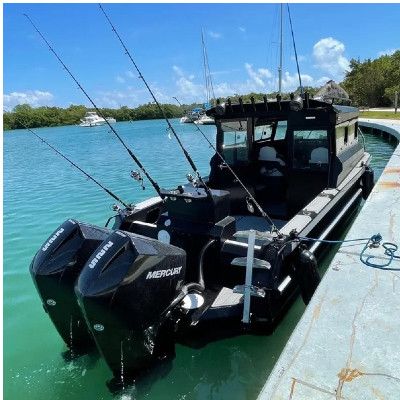
A boat around 7.5 meters provides enough length to handle waves more effectively than smaller recreational boats. The increased hull length improves stability and allows the vessel to maintain smoother movement through rough water.
This additional confidence is especially important during offshore fishing trips where conditions may change quickly.
Still manageable for transport and handling
While larger offshore boats offer more space, they also require greater handling experience and higher operating costs. Boats in the 25-foot class remain manageable for many owners while still offering strong offshore performance.
This balance makes them appealing for anglers who want capability without excessive size.
A workable balance between cockpit utility and cabin comfort
Many offshore fishing boats in this size range also include compact cabin areas. These spaces provide protection from weather and additional storage without taking away valuable cockpit space needed for fishing.
The combination of practical deck layout and comfortable cabin space creates a versatile vessel that suits both fishing and recreational use.
What should buyers look at besides length?
Hull shape and wave-cutting ability
Hull design determines how the boat moves through water. Deep-V hulls are particularly effective for offshore fishing because they cut through waves and reduce impact during rough conditions.
This type of design allows anglers to travel longer distances with improved comfort.
Beam, balance, and usable deck layout
Beam width influences stability and deck space. A wider beam generally provides better balance and more working room for anglers.
At the same time, interior layout should be organized efficiently so that storage compartments, seating areas, and fishing equipment remain accessible.
Engine setup and intended trip distance
Engine power must match the size and purpose of the boat. Offshore fishing often requires enough horsepower to travel long distances safely and return efficiently.
Proper engine selection ensures reliable performance and helps maintain comfortable cruising speeds.
How does offshore mission profile affect the right size?
Short coastal runs
Anglers who fish relatively close to shore may find that mid-sized boats provide more than enough capability. Short trips do not require extremely large vessels as long as the boat is designed for coastal conditions.
Longer runs to deeper water
Fishing farther offshore may require additional fuel capacity, stronger hull construction, and larger engines. Boats in the 7.5-meter class often provide the balance needed to support these longer trips while remaining manageable.
Mixed-use buyers who also want leisure comfort
Some boat owners want a vessel that supports fishing as well as recreational cruising. Boats with cabin space and comfortable seating provide a more enjoyable experience for families and guests.
These mixed-use boats allow owners to enjoy a wider range of activities on the water.
Offshore fishing boat size comparison
Offshore use scenario | Smaller setup | Mid-size 7.5m class | Larger setup |
Shorter trips | Possible | Strong fit | Often unnecessary |
Comfort in waves | Limited | Good balance | Excellent but expensive |
Handling | Easy | Manageable | Requires more experience |
Multi-purpose use | Moderate | Highly versatile | Depends on layout |
Ownership cost | Lower | Balanced | Higher |
Why does hull design matter as much as size offshore?
Deep-V performance in rougher water
Deep-V hulls are widely respected in offshore boating because they allow vessels to cut through waves rather than riding directly over them. This reduces impact and helps maintain stability during rough conditions.
Such performance is especially valuable for anglers who travel long distances offshore.
Stability and comfort underway
A properly designed hull improves both stability and ride comfort. This allows passengers to move safely around the boat while fishing or preparing equipment.
Stable boats also reduce fatigue during long trips, making the entire experience more enjoyable.
Why a well-designed 25ft hull can outperform poor larger designs
Length alone does not determine offshore capability. A carefully engineered 25-foot hull with strong materials and balanced design can perform better than a larger boat that lacks proper engineering.
This is why many experienced anglers focus on overall design quality rather than simply choosing the largest boat available.
Conclusion
Selecting the right offshore angling boat size should always be based on real fishing needs rather than assumptions about bigger vessels being better. The most suitable size depends on fishing distance, sea conditions, passenger capacity, and overall comfort expectations. For many anglers, a well-designed 7.5-meter aluminum boat provides an excellent balance of stability, usability, and manageable operation. Qingdao Gospel Boat Co., Ltd., located in Qingdao, China, specializes in designing and manufacturing high-quality aluminum boats for customers worldwide. With a wide range of vessels including fishing boats, patrol boats, landing craft, pontoon boats, passenger boats, and catamarans, the company focuses on building durable boats that help more people enjoy their time on the water.
Contact us today to learn more about aluminum offshore fishing boats and discover practical solutions designed for safe, comfortable, and efficient offshore adventures.
FAQ
What size offshore fishing boat is best for beginners?
Many beginners find that boats around 7 to 8 meters provide a good balance between stability and manageability. These boats offer enough space for fishing while remaining easier to operate than larger vessels.
Is a 25-foot offshore fishing boat big enough?
Yes, a well-designed 25-foot boat is widely considered suitable for many offshore fishing situations. With proper hull design and engine power, it can handle coastal and offshore conditions effectively.
Does boat size affect offshore safety?
Boat size can influence stability and comfort, but safety also depends on hull design, construction quality, navigation equipment, and responsible operation.
Why are aluminum offshore fishing boats popular?
Aluminum boats are valued for their durability, corrosion resistance, and lighter weight. These qualities make them reliable choices for anglers who frequently operate in coastal or offshore environments.


